
The Definitive Guide to SMS Compliance in Ireland
By Phonovation — trusted SMS delivery for Irish organisations.
Introduction
SMS is one of the most effective and trusted communication channels for Irish organisations. It is commonly used for appointment reminders, delivery updates, customer alerts, and promotional campaigns because messages are opened quickly and taken seriously.
Because SMS is direct and personal, it must be used responsibly. There are clear rules that ensure messages are respectful, expected, and lawful, protecting both the public and organisations.
This guide explains how to send SMS compliantly in Ireland. It is written in simple, practical language for teams across marketing, operations, customer support, IT, CRM, and compliance. The focus is on what organisations need to know and what they need to do to use SMS safely and effectively.
In this guide, you will learn:
•	What SMS compliance means in Ireland
•	The responsibilities of your organisation, your provider, and mobile networks
•	What Sender IDs are and why they matter
•	How to collect SMS contacts correctly
•	How to classify the messages you send
•	When consent is required
•	How opt-outs must work
•	How GDPR and ePrivacy apply in practice
•	The internal processes that protect your organisation
This guide helps you build or improve an SMS programme that is clear, compliant, and trusted.
What SMS Compliance Means in Ireland
SMS compliance in Ireland means sending messages that are lawful, transparent, and expected. It requires organisations to use personal data responsibly, communicate clearly, and give people control over what they receive.
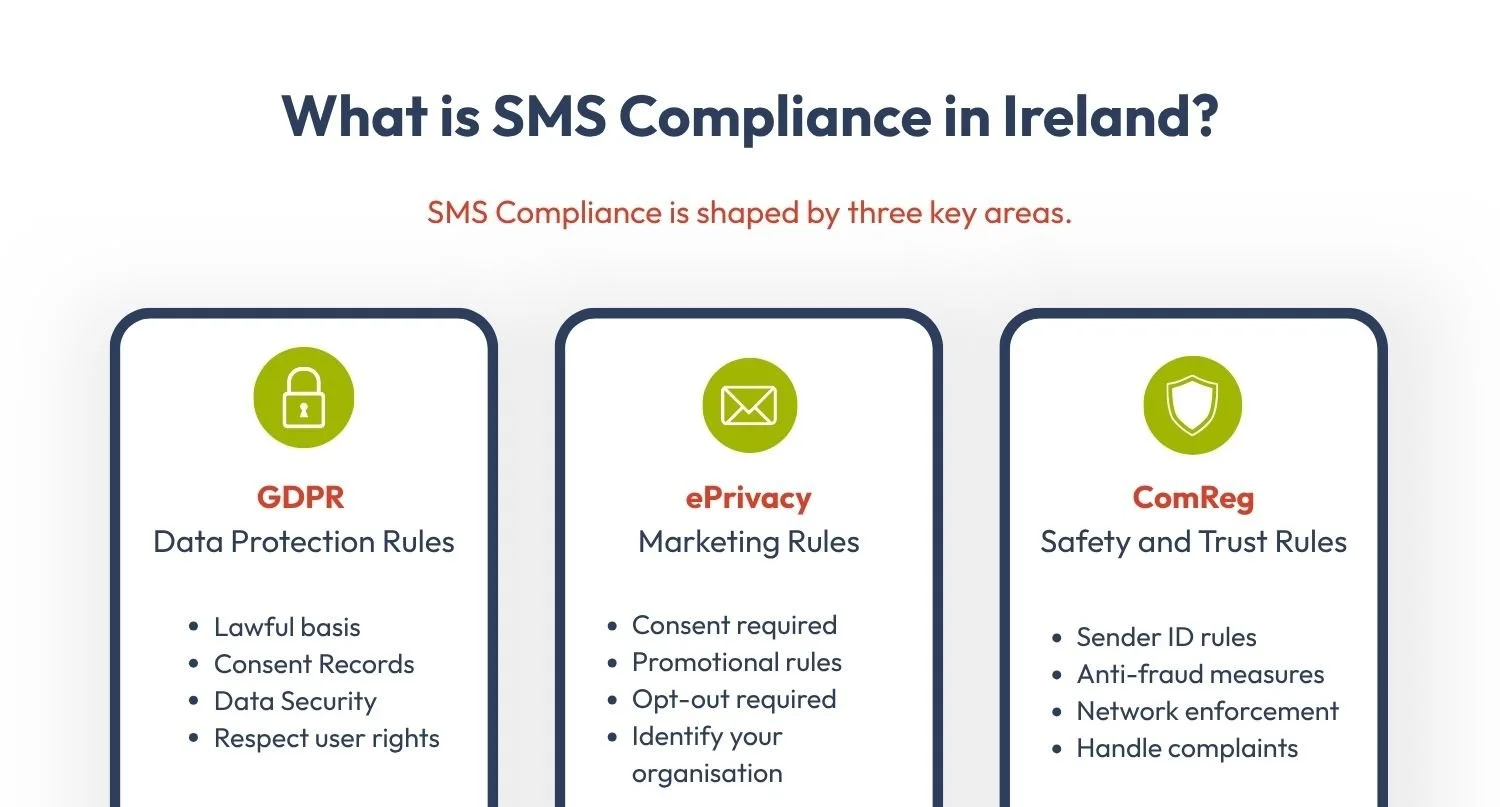
SMS compliance is shaped by three key areas: GDPR, ePrivacy regulations, and ComReg rules.
GDPR - Data Protection Rules
GDPR applies to every SMS you send because a mobile number is personal data.
It requires organisations to:
Have a lawful basis for sending each messageBe clear about how data is collected and usedHandle personal data securelyBe able to prove consent where requiredRespect people’s rights, including the ability to withdraw consent
GDPR governs how you collect, use, and manage personal data before, during, and after sending SMS.
ePrivacy Regulations — Marketing Rules
ePrivacy rules determine how SMS marketing messages can be sent.
They define:
When consent is requiredWhat counts as a promotional messageHow opt-outs must be providedHow existing customer relationships affect messagingHow you must identify your organisation
ePrivacy focuses on the content of your messages and the rules around marketing communication.
ComReg — Safety and Trust Rules
ComReg ensures SMS communication is clear, fair, and safe for consumers.
Their role includes:
Requiring clear sender identificationProtecting customers from misleading or harmful messagesEnabling networks to block fraudulent or suspicious SMSRegulating premium-rate servicesHandling complaints and enforcement
ComReg focuses on sender identity, fraud prevention, and message clarity, which directly impacts how SMS campaigns operate.
Who Is Responsible for SMS Compliance?
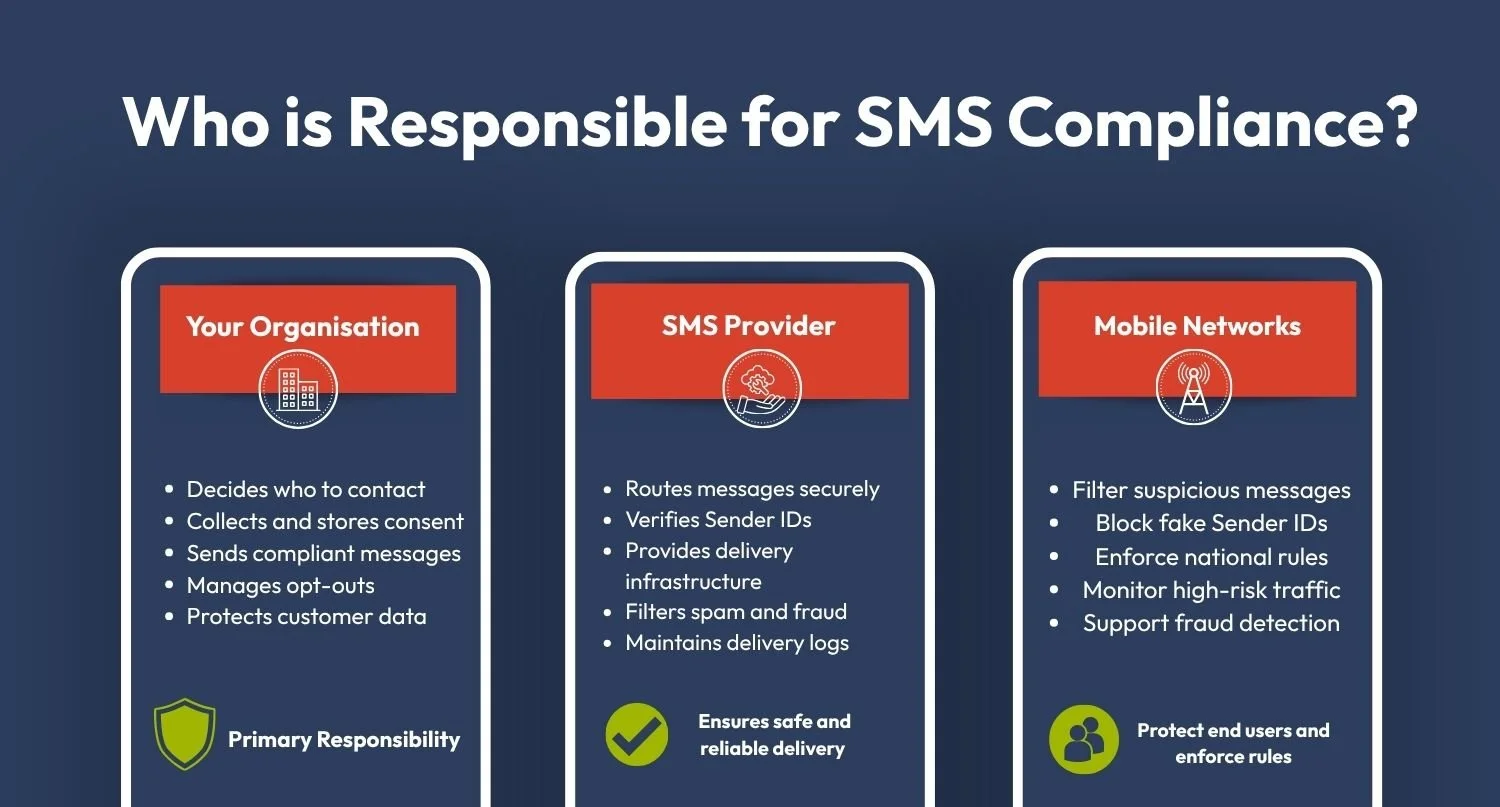
SMS compliance is a shared responsibility between your organisation, your SMS provider, and mobile networks. Each plays a distinct role in ensuring messages are lawful, secure, and trusted.
Your Organisation
Your organisation is primarily responsible for SMS compliance.
You decide:
Who to contactWhat messages to sendWhether consent is requiredHow consent is collectedHow opt-outs are handledHow personal data is stored and protectedWhat lawful basis appliesHow customers control communication
In practice, your organisation must:
Send marketing messages only with valid consentMaintain accurate, up-to-date consent recordsUse clear and compliant Sender IDsRespect opt-outs immediatelyTrain staff involved in messagingConfigure CRM systems correctlyManage message timing and frequencyEnsure all content is compliant
Most compliance issues arise from internal processes, not intent.
SMS Providers
SMS providers are responsible for the secure and compliant delivery of your messages.
They should provide:
Secure, compliant message routingReliable delivery infrastructureFraud and spam protectionAudit-ready delivery logsSender ID registration and verificationApproved connectivity with Irish networksMessage integrity throughout delivery
A compliant provider supports and reinforces SMS regulations, not just message delivery.
Not all providers meet these standards. Some organisations choose providers that take a compliance-first approach, including:
Using approved or direct network connectionsVerifying Sender IDs in line with Irish rulesBlocking suspicious or anonymous trafficMaintaining clear audit trails
Choosing the right provider helps reduce risk and supports compliance with GDPR, ePrivacy, and ComReg requirements.
Mobile Networks
Mobile networks enforce rules that protect SMS users.
They are responsible for:
Filtering harmful or suspicious messagesBlocking spoofed Sender IDsEnforcing transparency and fairness rulesMonitoring high-risk trafficSupporting investigations and fraud detection
Networks are increasingly strict, especially around sender identity, making compliance essential for successful message delivery.
Sender IDs
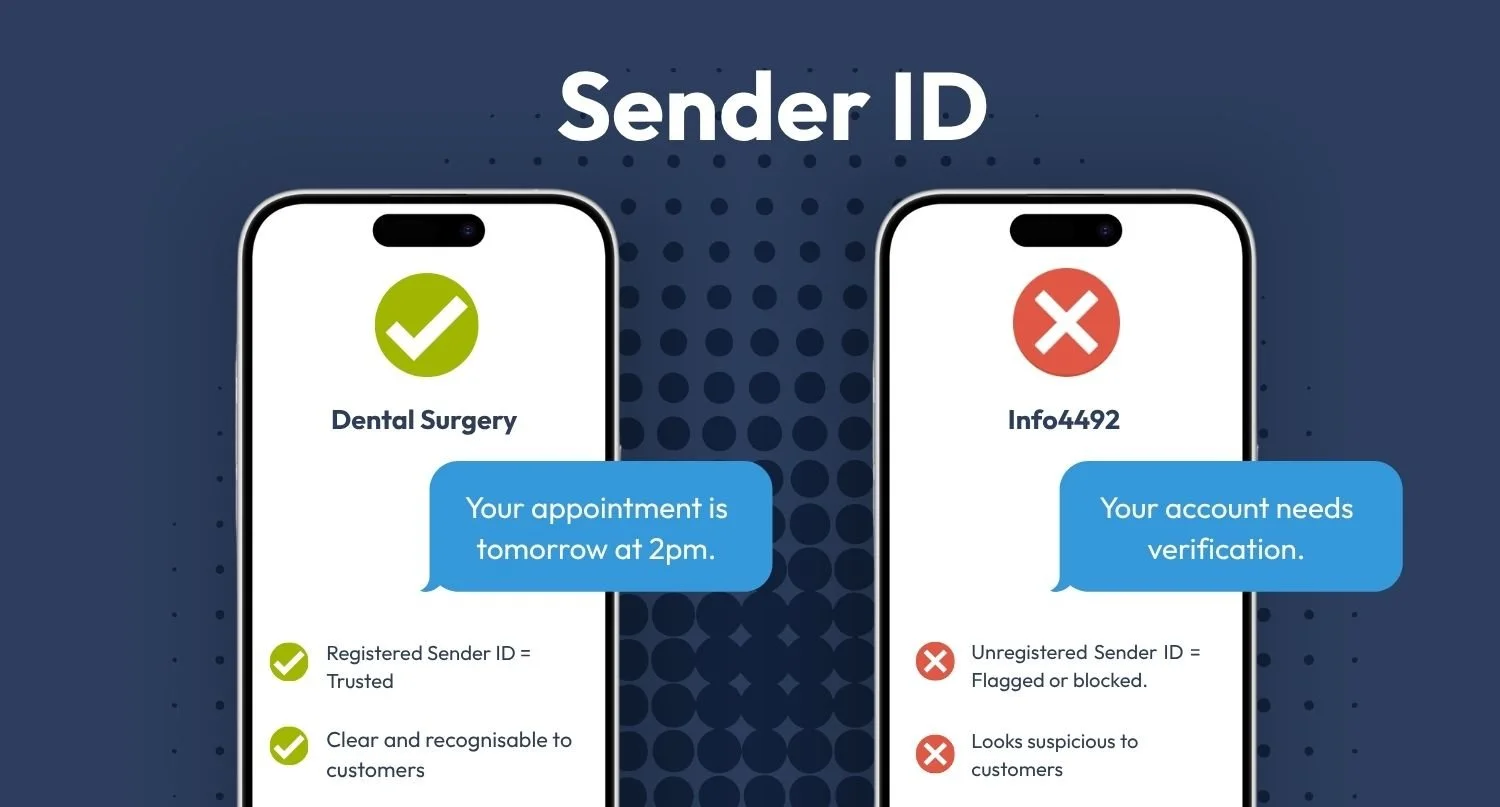
To send SMS in Ireland, you must use a registered and verified Sender ID.
A Sender ID is the name that appears at the top of a text message before it is opened, such as:
Phonovation, HappyStore, ParcelTrack, or CityClinic.
If your Sender ID is not registered, your messages may be labelled as “Likely Scam.” This is a critical requirement introduced in Ireland and a common cause of delivery and trust issues.
Why Sender IDs Are Required
Sender ID registration is now mandatory due to fraud prevention measures.
In the past, anonymous SMS messages were used to imitate trusted organisations. To address this, Irish networks introduced stricter controls:
Unverified Sender IDs may be rejectedNumeric or generic senders may be blockedSpoofed or misleading Sender IDs are filteredBusinesses must register Sender IDs before sending
These rules ensure messages are identifiable, trustworthy, and safe for recipients.
What Makes a Valid Sender ID
A valid Sender ID is clear, recognisable, and consistent.
It must be:
Registered with your messaging providerRecognisable to the customerUniqueConsistent across systemsNon-misleading11 characters or fewer
Examples of valid Sender IDs:
PhonovationIrishClinicParcelTrack
Examples likely to be blocked:
Generic names like “Info” or “Offers”“DeliveryNotice”Misleading or unclear names (e.g. “ZSK-Info”)
What Businesses Must Do
To comply with Sender ID requirements, your organisation must:
Register your chosen Sender IDAudit all systems that send SMSUse a consistent Sender ID across teamsAvoid names that resemble government bodies or banks
Poor Sender ID management can result in delivery failures, customer confusion, fraud concerns, and complaints.
Why Sender IDs Matter
A clear and consistent Sender ID improves trust and message performance.
It helps to:
Reassure customersReduce suspicionImprove open ratesLower opt-out ratesSupport network trustStrengthen brand recognition
Using a compliant Sender ID is one of the simplest ways to improve both trust and compliance.
Understanding SMS Message Types: Promotional vs Transactional
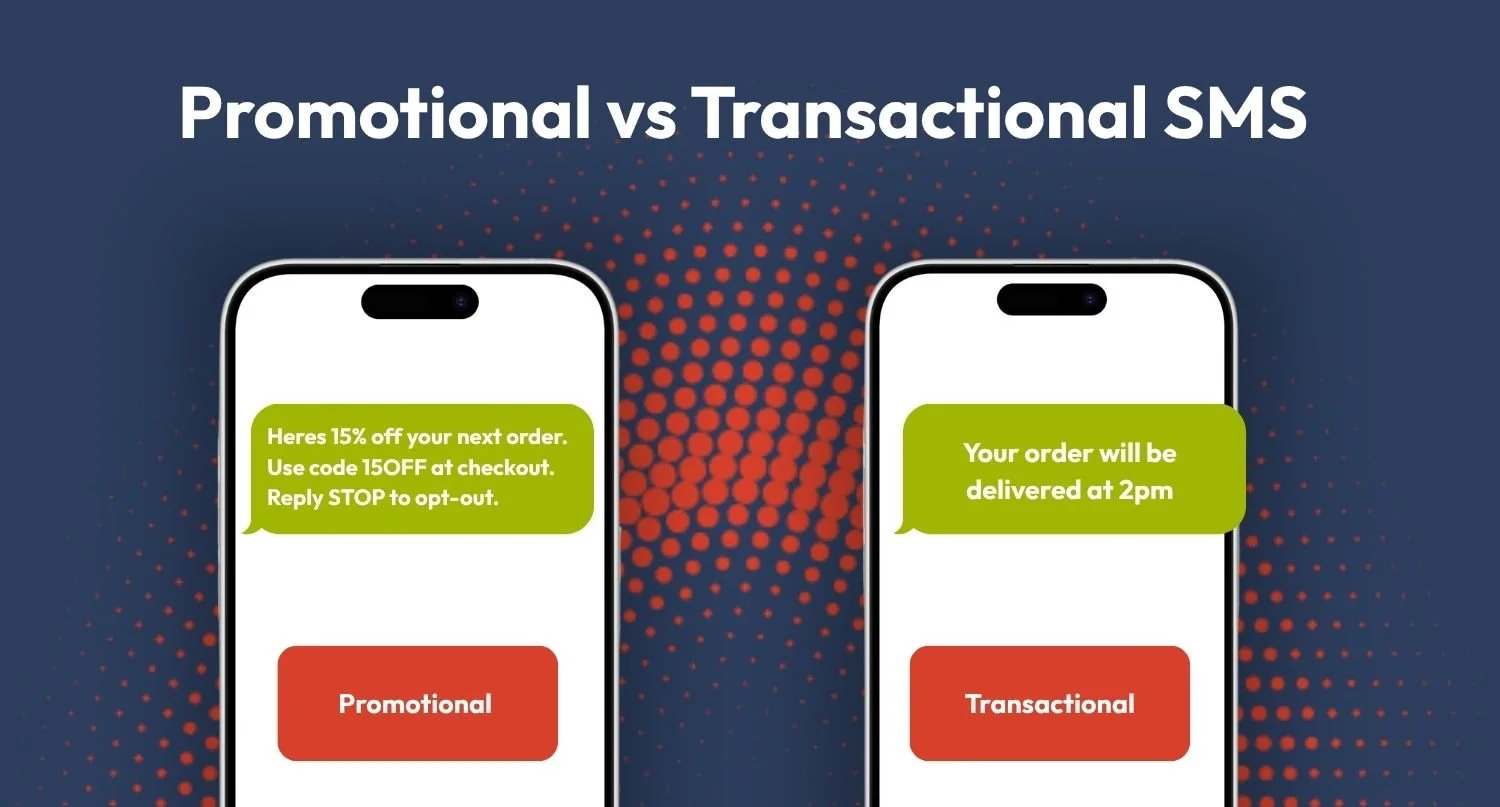
Every SMS message is either promotional or transactional, and this determines your compliance requirements.
It affects:
Whether consent is requiredWhether an opt-out must be includedWhat lawful basis appliesHow much content you can includeHow your messaging flows should be structured
Getting this distinction right is essential, as mistakes often lead to complaints or delivery issues.
Promotional Messages (Consent Required)
A promotional message is any SMS that encourages a commercial action.
This includes messages designed to sell, promote, or drive engagement.
Examples:
“20% off today only”“New stock just in — shop the latest arrivals”“Exclusive offer for SMS subscribers”“Refer a friend and receive €10 credit”
If the primary purpose of the message is to drive revenue, sign-ups, or engagement, it is promotional and requires explicit SMS consent.
Mixed-content rule:
Adding promotional content to a service message makes it promotional.
Examples:
“Your appointment is tomorrow — and enjoy 10% off your next treatment”“Your delivery is arriving today. Shop our new arrivals here”
These messages require consent because they include marketing content.
Transactional Messages (Consent Not Required)
A transactional message supports an existing service or customer action.
These messages are:
ExpectedNecessaryService-relatedNon-promotional
Examples:
Appointment remindersDelivery updatesOne-time passwordsAccount notificationsService outage alerts
If the message exists to support a service rather than promote something, it is transactional.
Key rule:
If a customer would reasonably expect the message based on an action they took (such as booking or ordering), it is typically transactional.
Why This Distinction Matters
Correctly classifying messages protects your organisation and improves customer experience.
It helps to:
Prevent non-complianceReduce opt-outs and complaintsImprove customer satisfactionApply the correct lawful basisReduce reputational riskMaintain clear and consistent communication
Clear message types lead to clearer, safer, and more effective SMS communication.
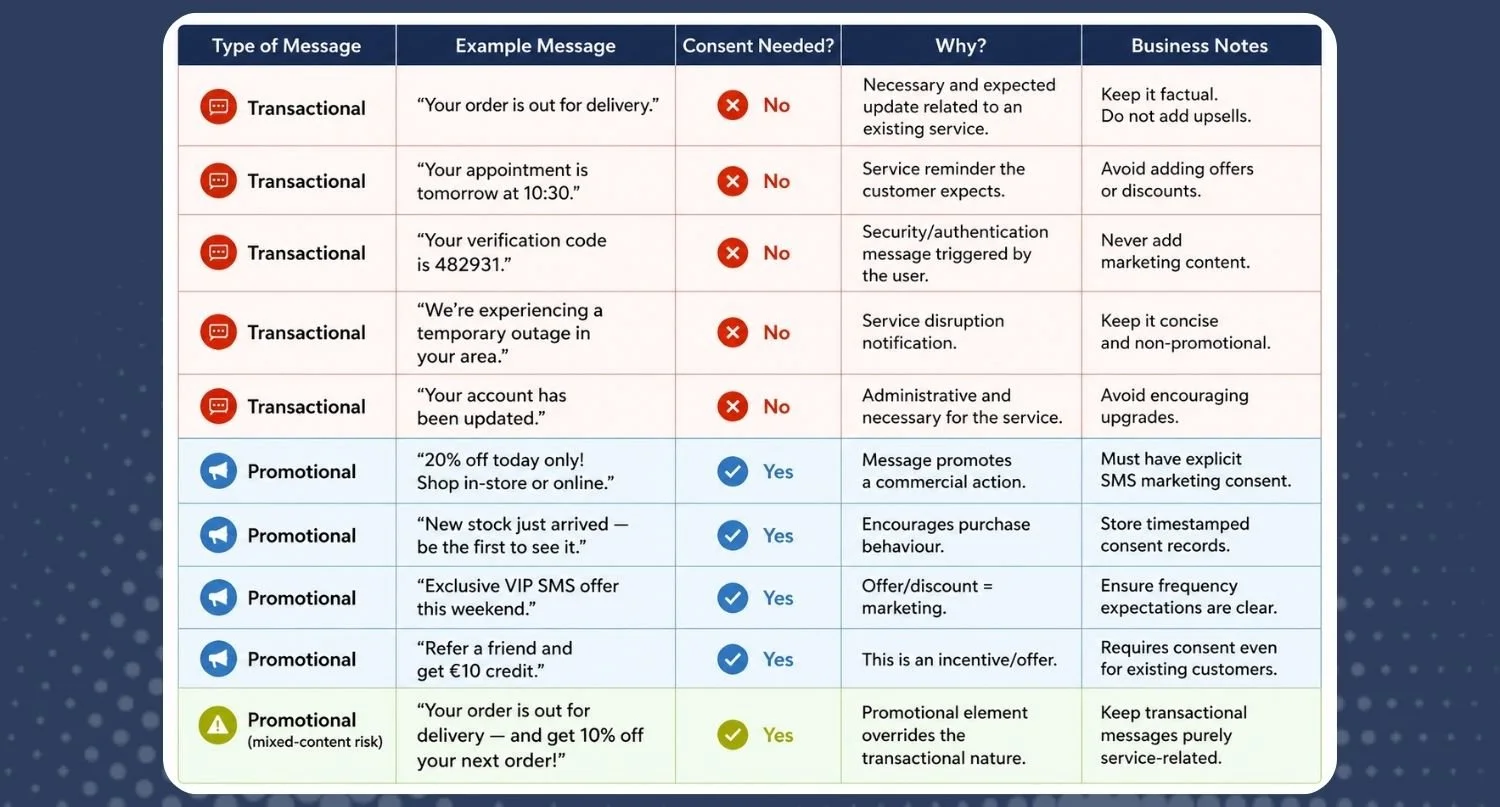
Promotional vs Transactional Messages (Summary Table)
Building Your SMS Lists the Right Way
To send SMS in Ireland, you need a clean and compliant SMS list.
An SMS list defines who you can contact and what messages you can send. There are two types:
Marketing SMS list: people who have explicitly opted inTransactional SMS list: customers who provided their number for a service and expect updates
These lists follow different rules and must be managed separately.
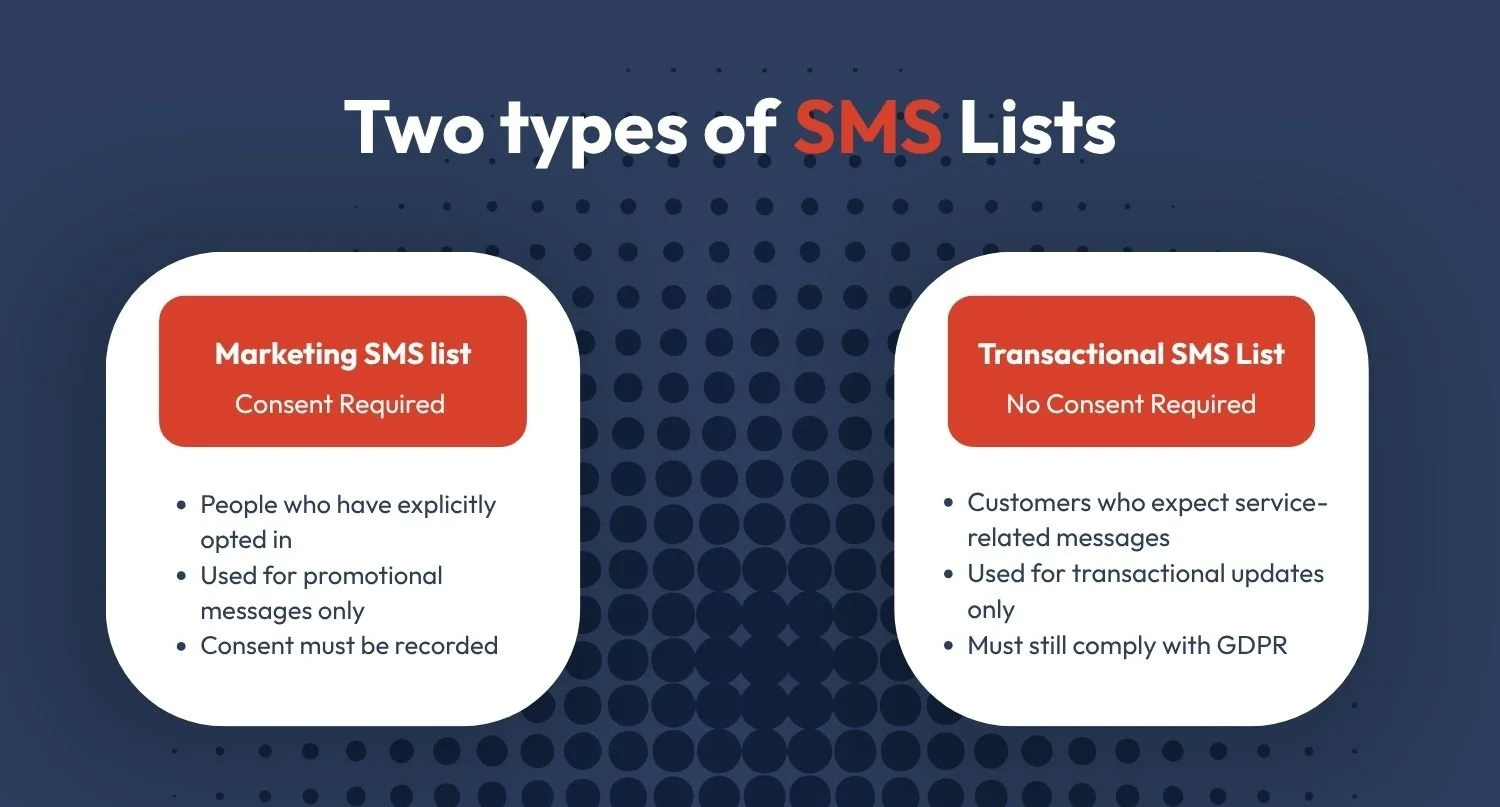
Two Types of SMS Lists
Every organisation manages two SMS lists, even if they exist in one system.
Marketing SMS List (Consent Required)
This list includes people who have clearly agreed to receive promotional SMS.
To add someone to this list, you must have:
Clear and specific permissionInformed consentA deliberate opt-in actionConsent that is recorded and provable
Marketing lists must be carefully collected, securely stored, and kept separate from transactional data.
Transactional SMS List (Consent Not Required)
This list includes customers who expect service-related messages.
Numbers are collected when customers:
Book appointmentsPlace ordersCreate accountsRequest deliveriesUse a service
You can send SMS when:
The message is necessaryThe customer expects itThe message is non-promotional
Transactional data must still follow GDPR rules, including data minimisation, purpose limitation, and security.
Transactional contacts cannot be used for marketing without separate consent.
Valid SMS Consent for Marketing
Valid SMS consent must be clear, informed, and provable.
It must be:
Freely given: no pressure or forced opt-inInformed: clear explanation of what will be sentUnambiguous: a deliberate action (e.g. ticking a box)Specific: applies to SMS onlyRecorded: stored and provable
If consent cannot be proven, it is not valid.
What Invalid Consent Looks Like
Invalid consent cannot be used for SMS marketing and creates compliance risk.
Common examples include:
Bundled consent (email + SMS together)Pre-ticked boxesVague wording (“receive updates”)Hidden consent in terms and conditionsMissing purpose or frequencyNo record of how consent was captured
A list built on invalid consent is a liability.
How Businesses Build SMS Lists
Compliant SMS lists are built through clear, transparent opt-in methods.
Common methods include:
Web forms: clear SMS checkbox and automatic loggingPaper forms: structured and securely storedStaff-assisted sign-ups: verbal consent recordedCompetitions: optional SMS opt-in, not required to enterVIP or loyalty clubs: clear value and expectations
Every method must clearly explain what messages will be sent, how often, and how to opt out.
Building Transactional Lists
Transactional lists do not require consent but must still be controlled and purpose-specific.
You can add a number when:
It is provided during a service interactionThe message is expected and necessaryThe message is non-promotional
You must not:
Use transactional data for marketingSend promotional content without consentRetain data longer than necessaryUse data for a different purpose
Transactional list management must be structured, accurate, and secure.
Why List Quality Matters
A compliant SMS list improves performance and reduces risk.
It leads to:
Higher engagementLower opt-outsCleaner dataFewer complaintsStronger customer trustEasier compliance
A compliant SMS list is a business asset. A non-compliant list creates risk and cost.
Opt-Out Requirements (How Customers Stay in Control)
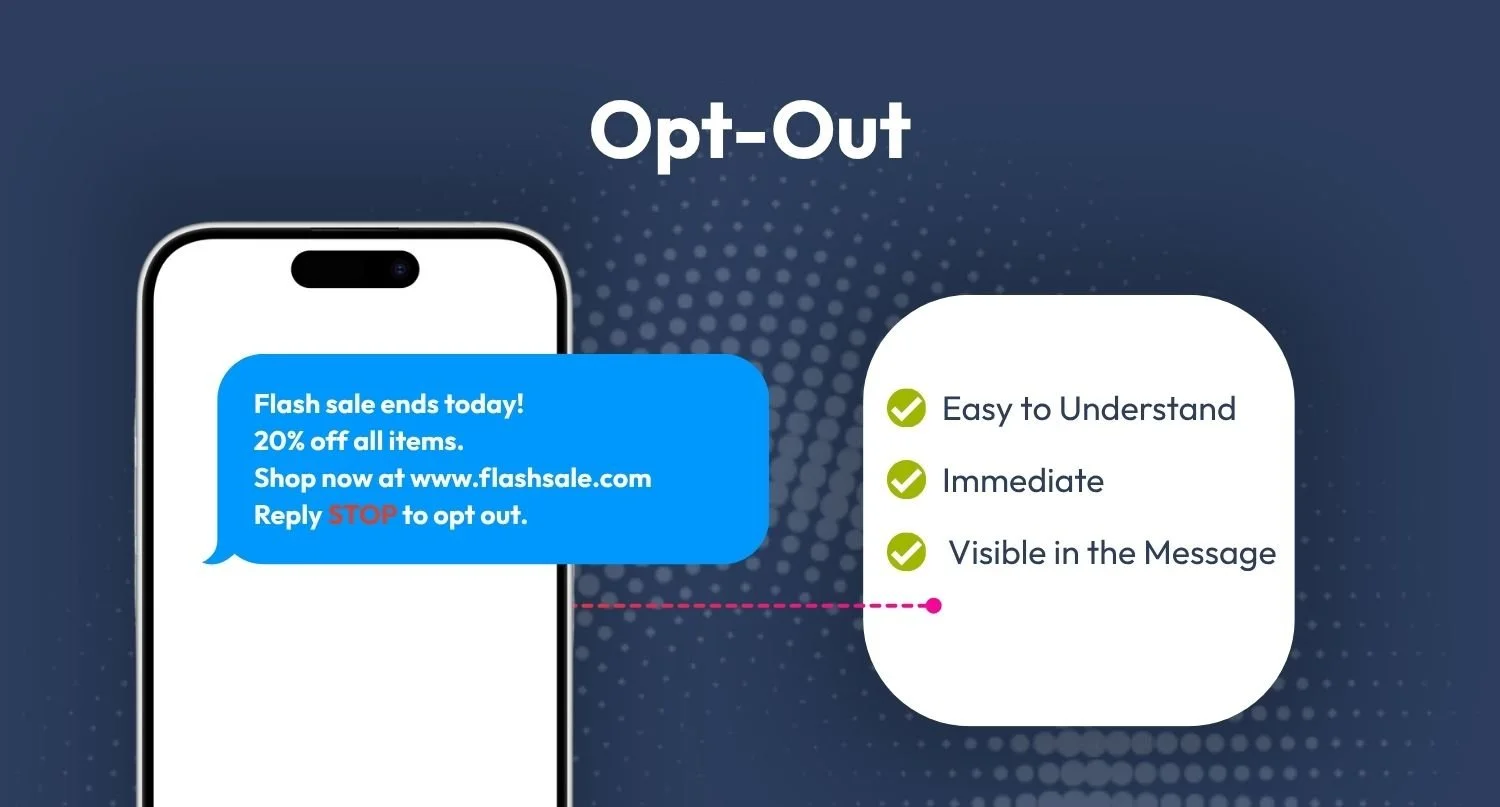
All promotional SMS messages must include a clear and immediate opt-out option.
The standard format is:
“Reply STOP to opt out.”
This wording is widely recognised, simple to follow, and supported across Irish networks.
What Makes a Compliant Opt-Out
A compliant opt-out is easy, immediate, visible, and low cost.
It must be:
Easy: clear instructions with minimal effortImmediate: processed without delayVisible: easy to find within the messageLow-cost: standard rate only, no premium charges
Sending messages after an opt-out is a common cause of complaints and non-compliance.
Non-Compliant Opt-Out Practices
Opt-out methods must be simple and direct.
Avoid:
Asking users to visit a website to unsubscribeMulti-step processes (e.g. “Text STOP, then confirm”)Unclear or uncommon keywordsHiding opt-out instructions in long textNot including an opt-out option
Complex or unclear opt-outs increase complaints and reduce trust.
Business Responsibilities
Your organisation must ensure opt-outs are respected across all systems.
You must:
Sync opt-outs across all platformsStop promotional messages immediatelyEnable teams to process manual opt-outsMaintain and review suppression lists
If a customer opts out, marketing must stop. Only necessary transactional messages may continue.
Common Mistakes and How to Fix Them
Most SMS compliance issues are caused by small, preventable mistakes.
Below are the most common issues and how to fix them:
Sending marketing without consent
Fix: Audit consent processes, refresh old lists, and use dedicated SMS opt-in checkboxes
Missing or unclear opt-outs
Fix: Include “Reply STOP to opt out” in every promotional messageInconsistent Sender IDs
Fix: Use one standard Sender ID across your organisationMixing promotional and transactional messages
Fix: Clearly define and train teams on message typesOver-messaging customers
Fix: Set clear frequency limits (e.g. 2–4 messages per month)Using outdated or purchased lists
Fix: Do not buy lists and regularly remove inactive contacts
Fixing these issues improves compliance, delivery, and customer trust.
GDPR in Plain English
GDPR applies to every SMS because a mobile number is personal data.
It requires your organisation to:
Have a lawful basis for every messageUse data fairly and transparentlySend only necessary informationAvoid sensitive data in SMSStore data securelyMaintain clear records
Lawful basis for SMS:
Promotional messages: ConsentTransactional messages: Legitimate interest (only if expected and necessary)
In practice, GDPR means:
Do not send unexpected messagesDo not overshare informationDo not include sensitive dataProtect customer data at all timesKeep clear records of consent and decisions
Ireland’s ePrivacy Regulations
ePrivacy rules govern SMS marketing.
They apply to any message that promotes, advertises, or encourages a commercial action.
Promotional SMS must include:
Explicit SMS consentClear sender identificationA simple opt-out optionHonest and transparent contentAppropriate message frequency
For your organisation, this means:
Only contact users who have opted in to SMSDo not reuse email consent for SMSStore and document consent clearlyProcess opt-outs immediatelyEnsure messages are expected
ePrivacy ensures SMS communication is controlled, relevant, and trusted.
When Consent Is Not Required (Transactional SMS)
SMS consent is not required for transactional messages, but strict conditions apply.
A message must be:ExpectedNecessaryService-relatedNon-promotional
Examples of transactional messages:
Appointment remindersDelivery updatesOrder confirmationsOne-time passwords (OTP)Account alertsService outage notifications
Key rule:
If a message includes any promotional content, it becomes marketing and requires consent.
Keeping transactional messages short, factual, and service-focused prevents compliance issues.
Industry-Specific Guidance (Practical Examples)
SMS compliance risks vary by industry, but the rule is consistent: keep messages clear, necessary, and non-promotional where required.
Retail
Retail SMS must separate service updates from marketing.
Safe examples:
“Your click-and-collect order is ready”“Your receipt is attached”
Common risks:
Adding promotional content to transactional messagesIncluding unnecessary purchase details
Healthcare
Healthcare SMS must never include sensitive personal data.
Safe example:
“Your appointment is scheduled for tomorrow at 10am”
Key rule:
Keep messages minimal, neutral, and non-sensitive.
Logistics and Delivery
Logistics SMS should provide expected delivery updates only.
Safe example:
“Your parcel is arriving today between 1–3pm”
Key rule:
Messages must be timely, relevant, and service-focused.
Hospitality
Hospitality SMS must avoid adding promotions to booking messages.
Safe example:
“Your booking is confirmed for Friday at 7pm”
Common risk:
Including upsells in confirmation or reminder messages
Financial Services
Financial SMS must not include account or sensitive information.
Safe example:
“Your one-time code is 839204”
Key rule:
Only send essential security or account-related alerts without sensitive detail.
Clear, industry-specific messaging reduces risk and ensures SMS remains compliant and trusted.
Internal Workflows for Compliance
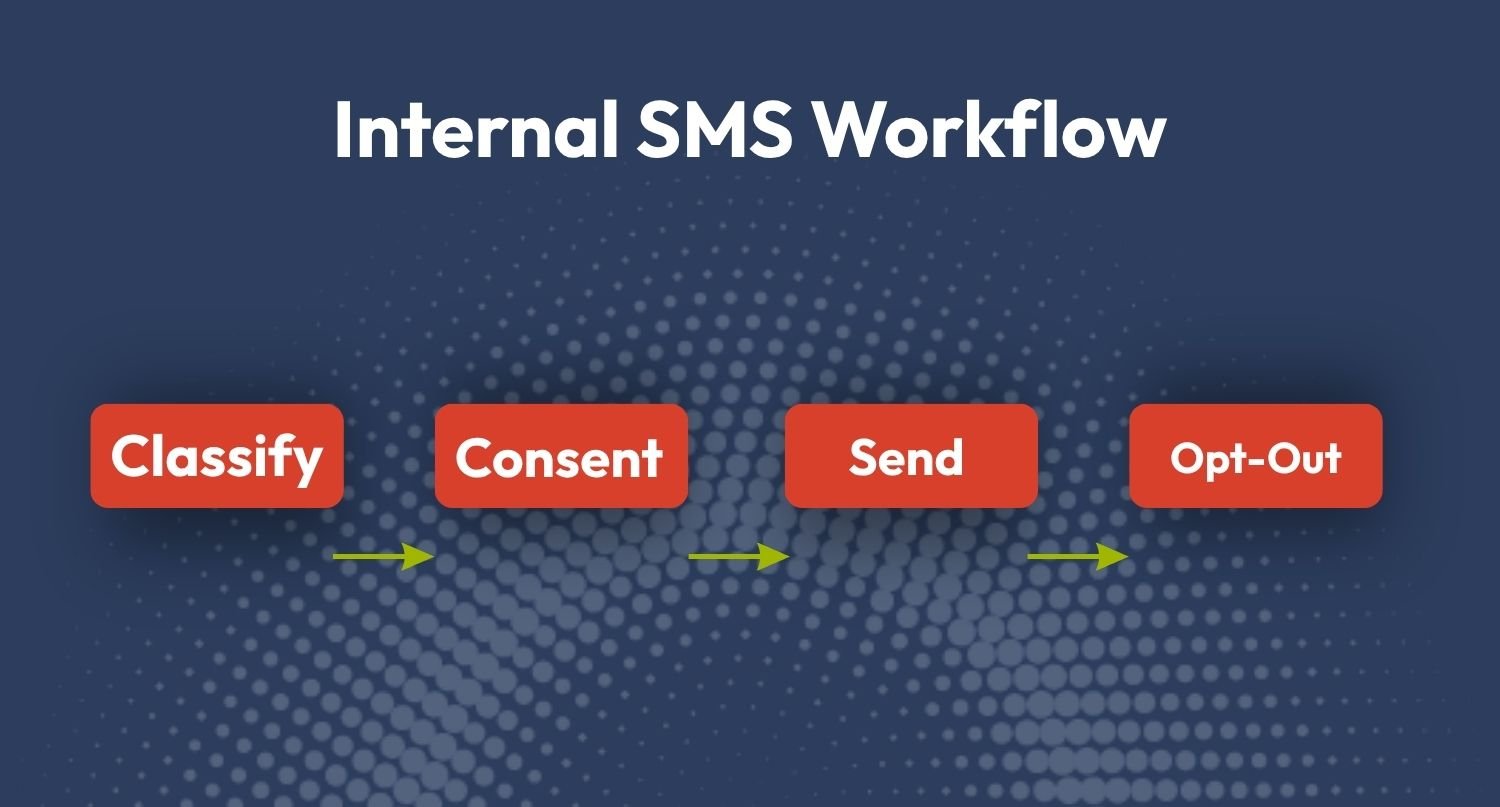
SMS compliance requires clear internal processes, not just rules.
To stay compliant long-term, organisations should implement workflows for:
Message classificationConsent capture and storageOpt-out syncing across systemsSender ID managementMessage template reviewsApproval processesCRM data hygiene
These workflows ensure SMS communication is consistent, controlled, and compliant.
This section acts as a practical guide to implementing SMS compliance across your organisation.
Best Practices
Effective SMS communication is clear, consistent, and respectful.
Follow these best practices:
Keep messages shortSend at appropriate timesUse consistent brandingDo not send unexpected messagesAvoid sensitive informationMonitor opt-outsRemove inactive contacts regularlyReview message templates regularly
Consistent best practices improve compliance, delivery, and customer trust.
Compliance Checklist
Use this checklist before sending any SMS campaign.
✓ Do you have SMS consent (if the message is promotional)? ✓ Is the message type correctly classified?✓ Is the opt-out clear and visible?✓ Is the Sender ID registered and consistent?✓ Does GDPR allow this content?✓ Is the timing appropriate?✓ Has the SMS list been reviewed?This checklist ensures every message meets compliance requirements before sending.
FAQs
Is SMS marketing legal in Ireland?
Yes. SMS marketing is legal with explicit consent.
Do transactional messages require consent?
No. Consent is not required if the message is expected and necessary.
Can transactional SMS include promotional content?
No. Adding promotional content makes the message marketing.
Can organisations buy SMS lists?
No. Purchased lists are not compliant.
Can customers opt out at any time?
Yes. Opt-outs must be processed immediately.