
How Customer Expectations Have Changed (And Why Messaging Is Now the Standard)
Customer Expectations Have Changed from Channels to Conversations
The way customers communicate with businesses has changed.
For years, interactions were built around delays. You called a number and waited. You sent an email and waited again. Every step added friction, and every interaction started from scratch.
That model no longer holds.
Customers now expect to message a business, get a response quickly, and continue the conversation without repeating themselves. They expect to resolve what they need in one place, without switching channels or waiting for replies.
What used to be accepted as part of the process is now a point of frustration.
Messaging is not just more convenient. It removes the gaps between questions, decisions, and actions.
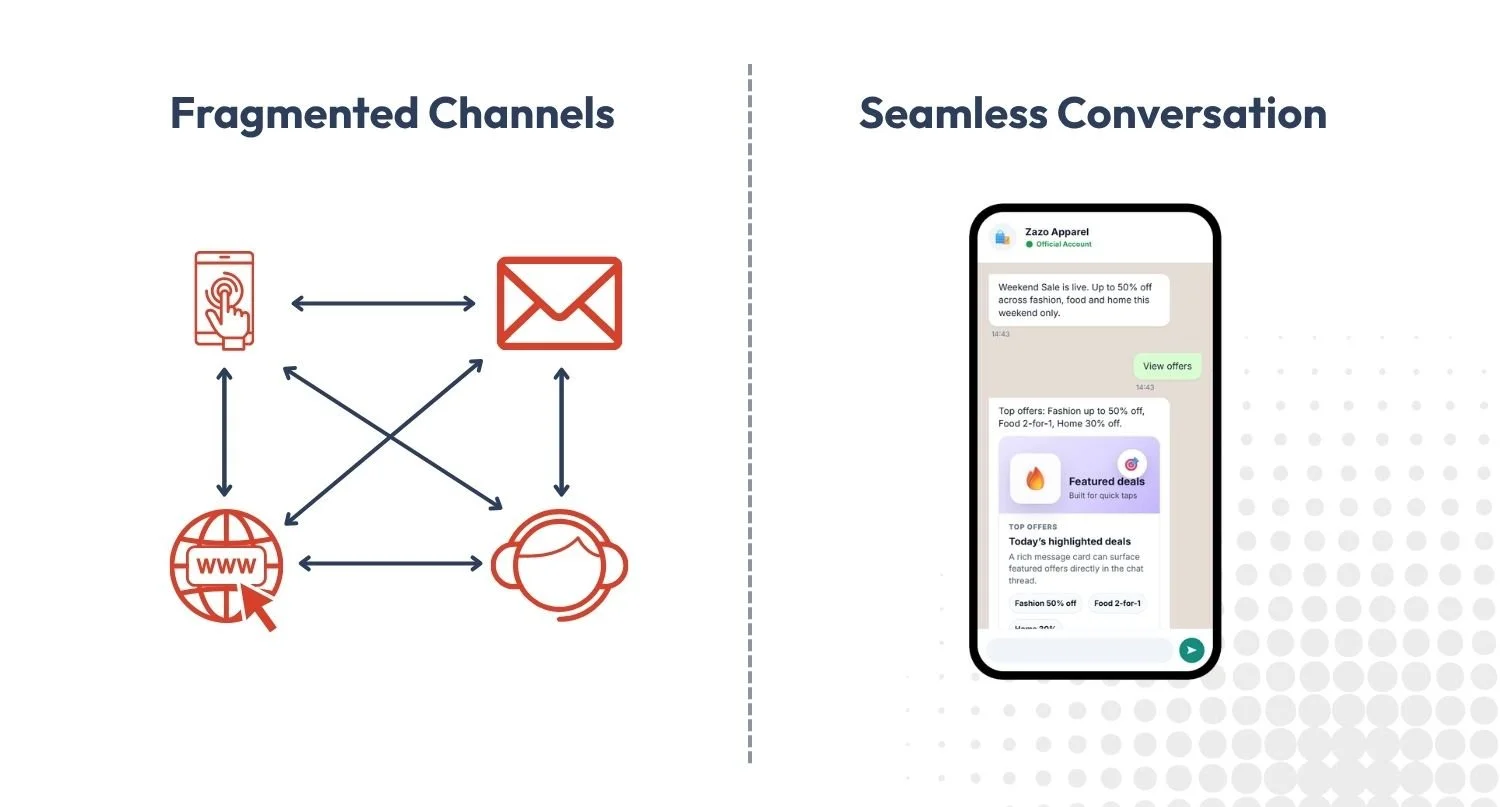
This shift is often described as messaging-first communication. It reflects a move away from fragmented, channel-based interactions towards continuous, real-time conversations.
Messaging platforms such as the WhatsApp Business Platform enable this by allowing businesses to respond instantly, maintain context, and complete actions within a single thread.
The implication is clear. Messaging is no longer an alternative channel. It is becoming the standard for how customers interact with businesses.
To understand what this means in practice, it helps to look at the key shifts shaping how customers now interact with businesses. These shifts affect how businesses respond, how customers buy and engage, and how actions are completed across the journey.
Shift 1: The End of Waiting
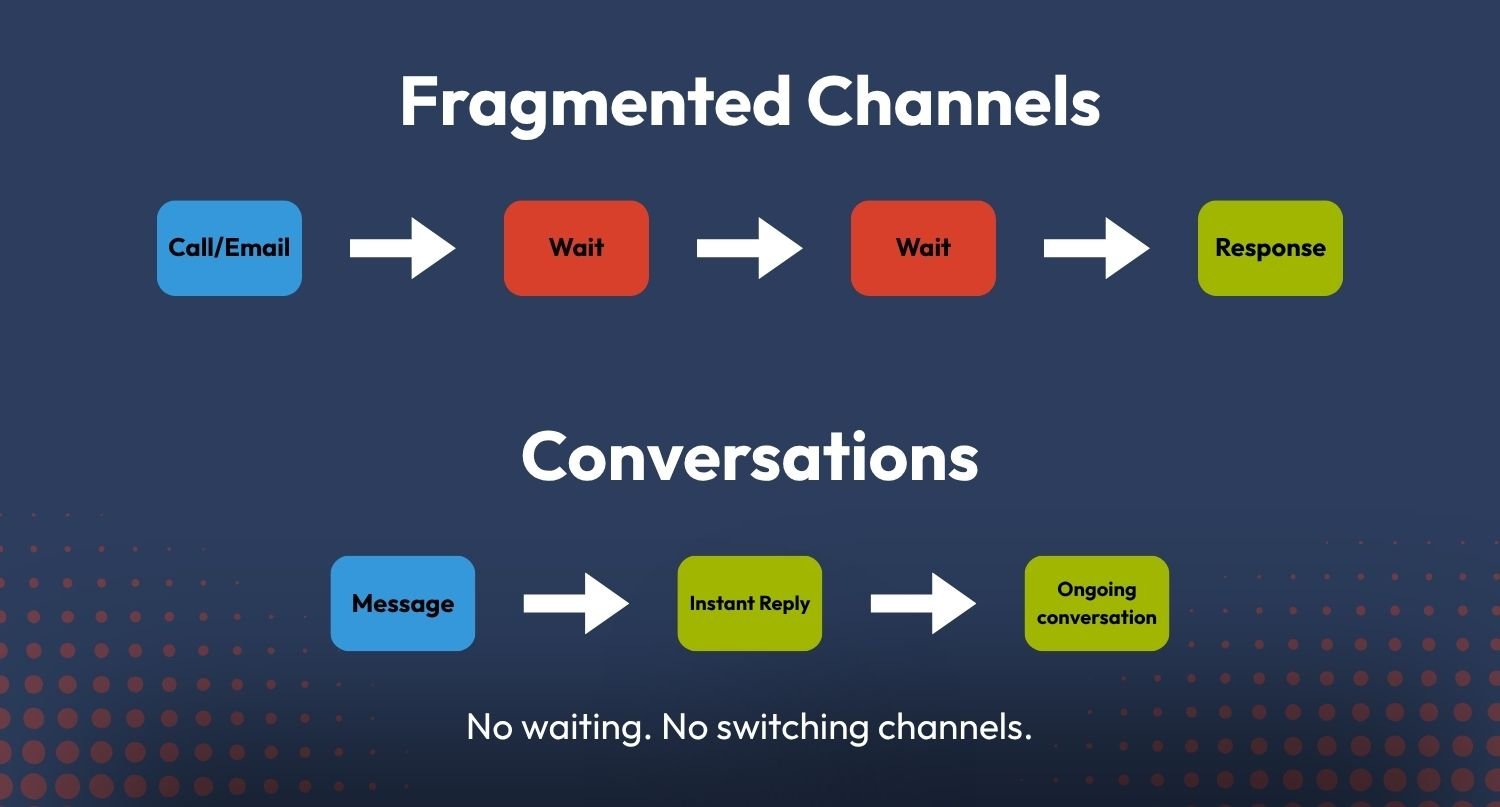
Customers no longer accept waiting. They expect immediate responses as standard.
Keeping customers waiting is no longer acceptable. Speed used to be a competitive advantage. Now it is the baseline. Customers expect quick responses, immediate updates, and fast resolution as part of the standard experience.
This is not about impatience. It is about what people are used to. Same day delivery, real-time tracking, instant answers. These experiences have reset expectations across every interaction.
Messaging removes waiting by enabling real-time responses.
As a result, traditional channels like phone and email feel slow and fragmented. Waiting on hold or hours or days for a reply is no longer tolerated. It is seen as unnecessary friction.
Customers are not just comparing you to competitors. They are comparing you to the fastest and simplest experience they have had anywhere.
This shift is also changing how support is delivered. People expect help to be available when they need it, not within business hours. The demand for always-on, real-time responses is now standard.
Messaging platforms such as the WhatsApp Business Platform enable businesses to meet this expectation by allowing them to respond instantly and maintain ongoing conversations with customers.
The implication is simple. If a customer has to wait, the experience is already behind expectations.
Shift 2: Buying Happens Inside the Conversation
Customers no longer want to move between channels to complete a purchase.
What they expect instead is a single interaction where everything happens in one place.
Switching from an ad to a website, then to email or phone, adds steps and increases the chance of drop-off. When customers are forced to switch channels, many leave before completing the purchase.
Messaging makes this possible.
Messaging reduces drop-off by keeping customers in one continuous interaction.
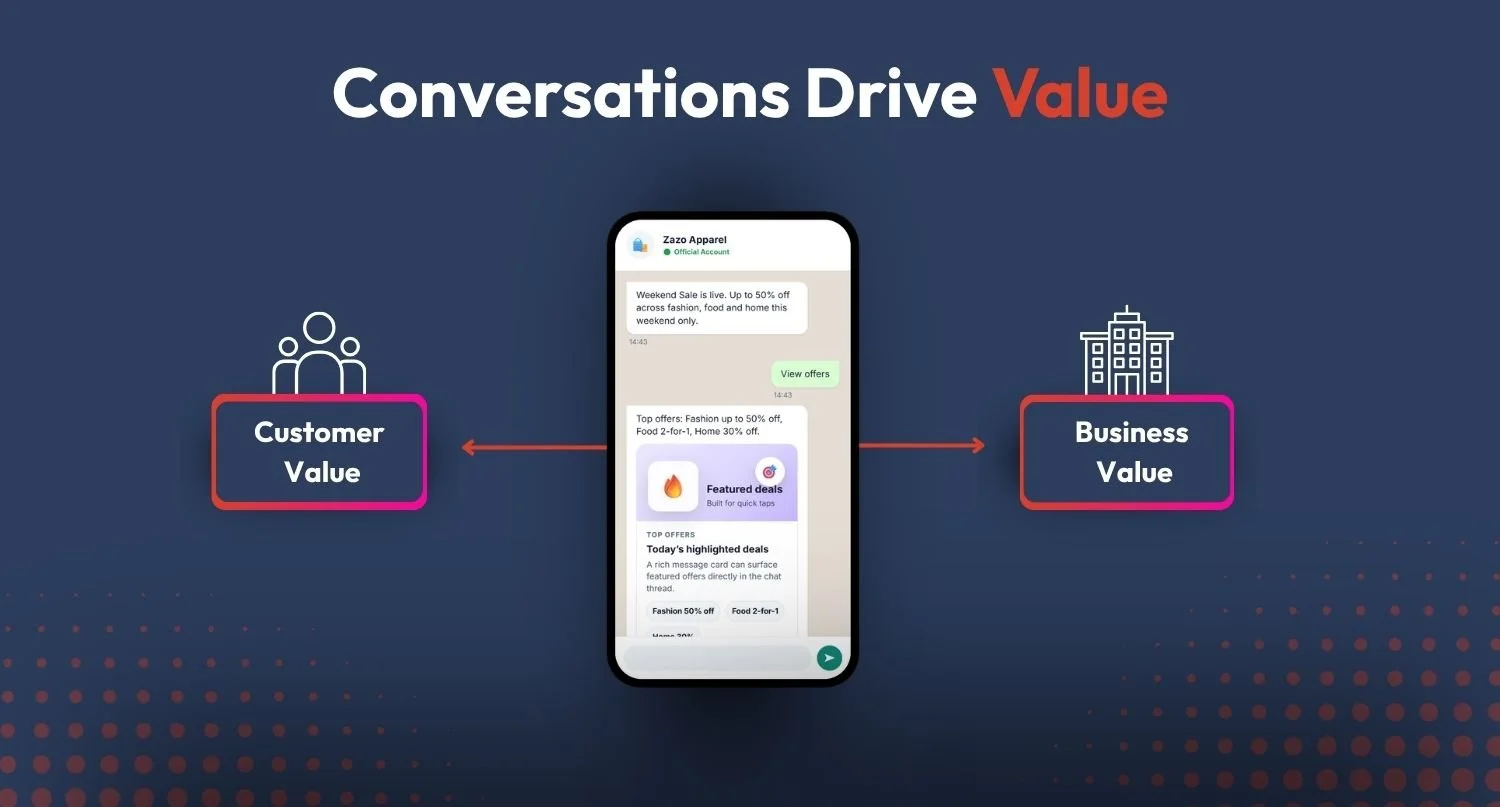
A customer can discover a product, ask questions, get answers, receive a quote, and complete a purchase within the same conversation. There is no need to restart the journey or switch context. The path from interest to action becomes shorter and more direct.
This changes how businesses capture demand.
Instead of sending customers away to complete a transaction, messaging allows businesses to respond at the moment of intent and complete actions within the same interaction. Questions are answered immediately, hesitation is resolved in real time, and decisions are completed without delay.
Messaging platforms such as the WhatsApp Business Platform enable this by allowing businesses to manage conversations, share products, and complete transactions within a single thread.
That has a direct impact on conversion.
Customers are more likely to purchase from businesses they can message. The experience is faster, simpler, and more personal. Engagement is higher, and fewer customers drop out of the journey.
The implication is clear. The closer a business stays to the moment of intent, the more likely that intent turns into action.
When conversations become the place where purchases happen, performance changes.
One retailer saw:
• 1.9x more revenue per recipient
• 1.7x higher open rates
• 5x higher click-through rates
simply by enabling customers to browse and buy within a messaging conversation.
Shift 3: Trust Depends on the Channel
Customers decide whether to engage based on how much they trust the channel.
Trust is no longer built over time alone. It is shaped by the channel a customer is using.
As digital communication has increased, so has customer caution. People are more aware of scams, impersonation, and misuse of personal data. As a result, they look for clear signals that confirm who they are interacting with.
This matters most during high-risk moments such as sharing personal information or authorising a payment. If there is any uncertainty, engagement drops and hesitation increases.
Verified messaging increases trust by making business identity clear.
Messaging channels that provide identity and security signals help remove that doubt. Features like verified business profiles, secure delivery, and encryption give customers confidence that they are interacting with a legitimate business and that their data is protected.
Messaging platforms such as the WhatsApp Business Platform support this by providing verified profiles and secure, end-to-end communication within a single thread.
This allows messaging to be used not just for updates or support, but for more sensitive interactions such as authentication, payments, and account access.
The implication is clear. When customers trust the channel, they are more likely to engage and complete important actions. With 74.6% of consumers saying they trust a business more when they can exchange messages with them directly.
When trust is built into the channel, completion rates improve.
One platform saw:
• 20% increase in account recovery success
• 11% increase across another user base
• 9% increase in new account creation
by delivering secure one-time passwords directly through messaging.
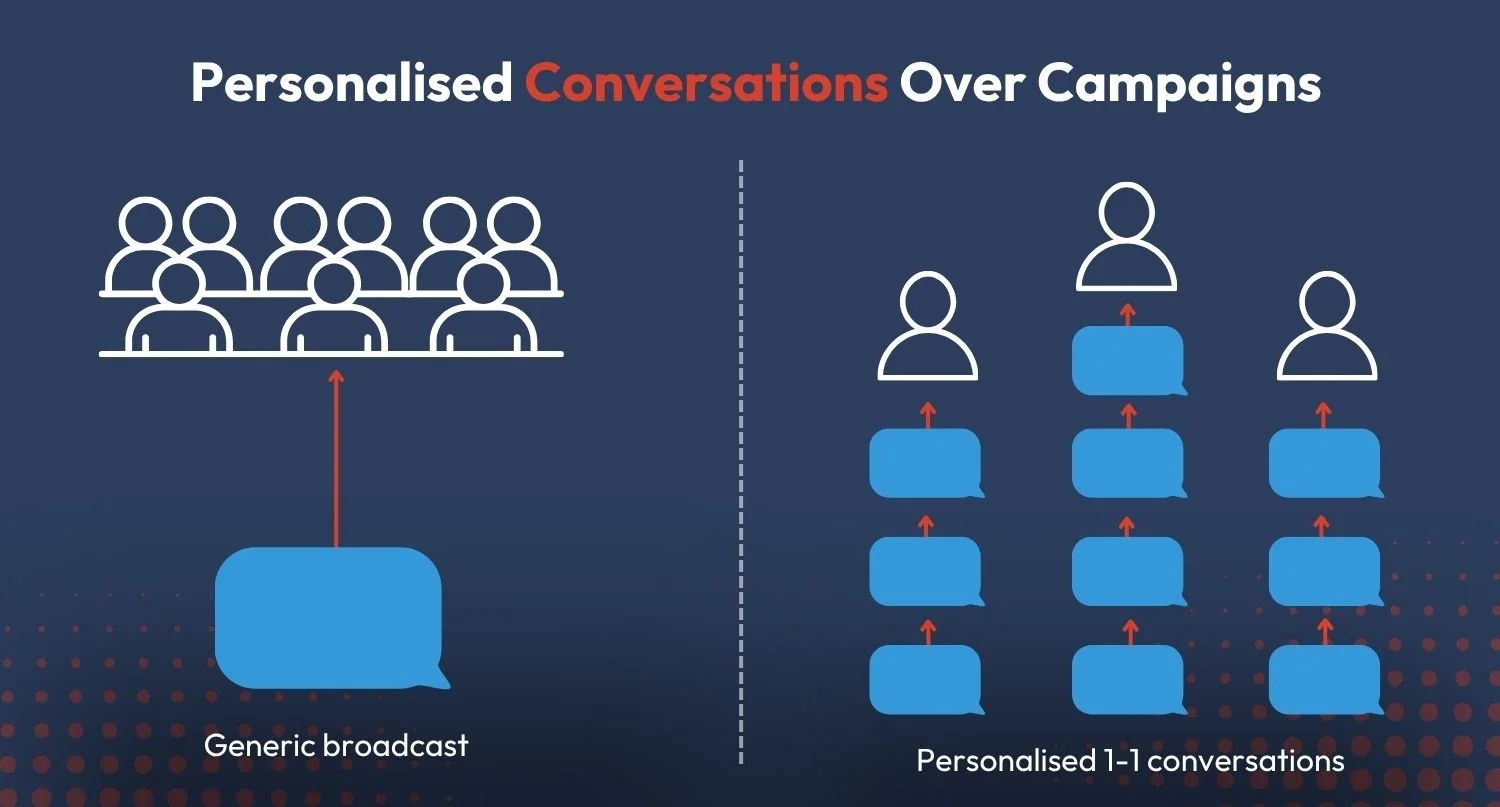
Shift 4: Customers Expect Conversations, Not Campaigns
Customers are moving away from one-way marketing.
Generic broadcasts and mass messaging no longer work. When communication feels impersonal or irrelevant, it reduces engagement and makes it easier for customers to ignore.
Customers now expect something closer to a real interaction.
They want to communicate with businesses in the same way they communicate with people. That means conversations that are responsive, relevant, and connected to previous interactions.
Contextual messaging improves engagement by making communication relevant.
Messaging makes this possible.
Instead of starting from scratch each time, businesses can maintain context within a single thread. Past interactions, preferences, and questions are carried forward, making each exchange more efficient and easier to act on.
Messaging platforms such as the WhatsApp Business Platform support this by allowing businesses to maintain ongoing, two-way conversations with customers over time.
This changes how communication is perceived.
When messages are timely and useful, they no longer feel like marketing. They feel like part of a conversation. That builds stronger relationships and makes customers more likely to engage.
The implication is simple. The more relevant the interaction, the more valuable it becomes to the customer.
This shift from campaigns to conversations is already delivering measurable results.
In one case, a consumer brand replaced traditional campaign messaging with a two-way conversational experience delivered through messaging.
The result was a 14x increase in product sales, showing how engagement-driven interactions can dramatically outperform broadcast campaigns.
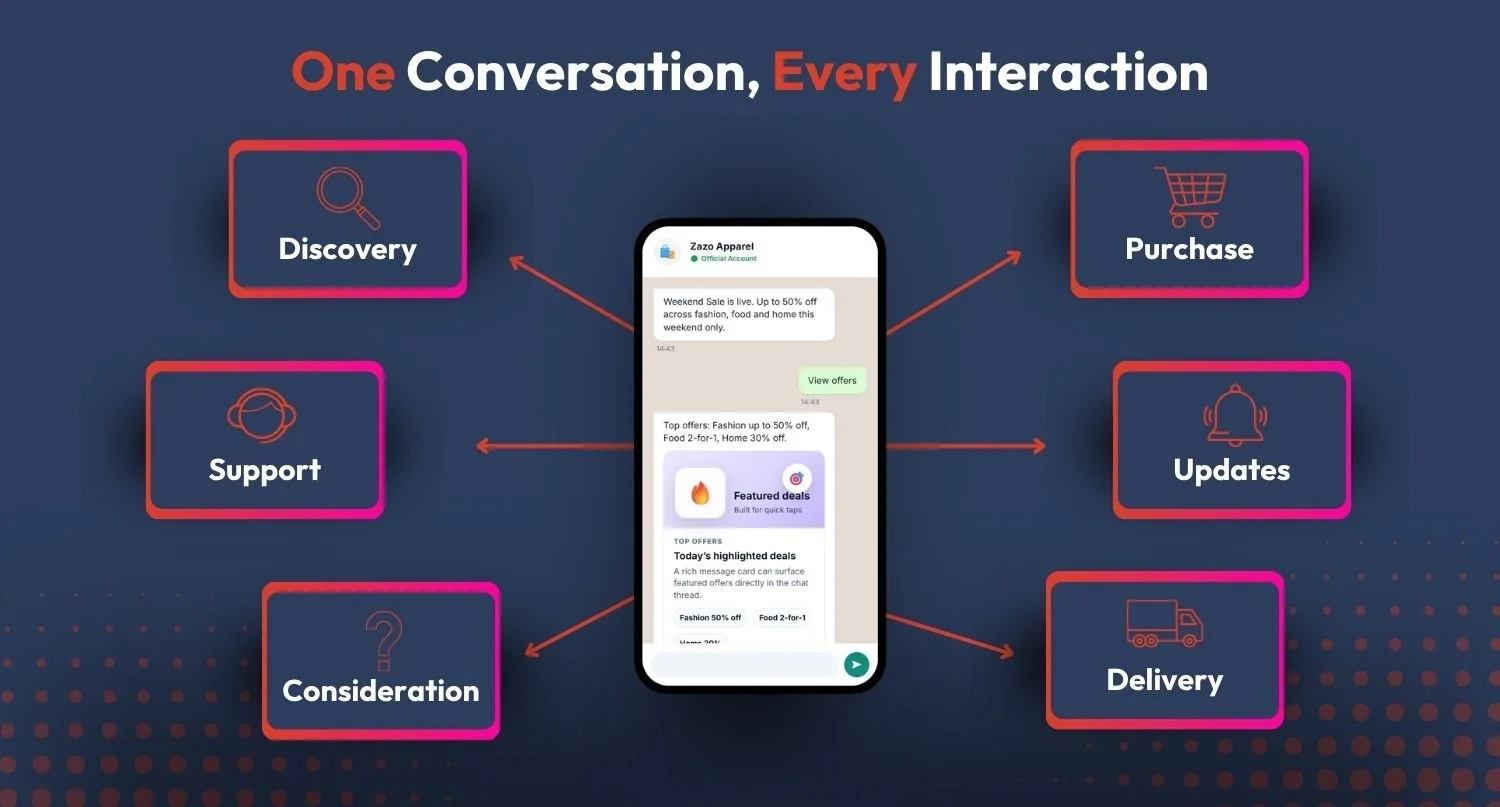
Shift 5: Conversations Are Always On and Happen in One Place
Customers no longer expect communication to be limited by time or channel.
Customers expect to get answers when they need them and to handle everything in one place.
That includes asking questions, making a purchase, receiving updates, and getting support without switching between systems.
Messaging platforms enable always-on communication by combining automation and real-time conversation.
AI is helping make this possible.
67.7% of consumers say AI chatbot responses are helpful, especially when they provide quick answers and reduce waiting time. Businesses are using this to handle routine queries instantly, while keeping human support for more complex interactions. In practice, this is already happening at scale. Bank Rakyat Indonesia’s AI assistant now handles 38% of all customer inquiries, improving response times and overall customer satisfaction.
At the same time, customers value continuity.
Many prefer to keep everything in one thread, with conversation history carried forward so they do not have to repeat themselves or restart the journey.
Messaging platforms unify the customer journey by combining support, transactions, and updates in a single conversation.
Businesses are starting to bring these elements together. Instead of separate systems for marketing, support, and transactions, communication is being unified into one continuous experience. Retailers like Chedraui have already taken this approach, combining marketing, service, and authentication messaging into one platform and achieving a 3.8X return on investment.
Messaging platforms such as the WhatsApp Business Platform enable this by bringing real-time communication, automation, and transaction handling into a single, persistent thread.
The implication is clear. When communication is always available and happens in one place, the entire customer journey becomes simpler, faster, and easier to complete.
What This Means for Your Business
These shifts are already changing how customers behave. The question is whether your communication model has kept up.
To meet these expectations, businesses need to rethink how they interact with customers.
Waiting needs to be removed wherever possible. Customers expect real-time responses, and delays now lead directly to drop-off.
The distance between interest and action needs to be reduced. Keeping interactions and transactions in one place makes it easier for customers to move forward.
Trust needs to be visible from the start. Clear identity and secure communication are now part of the experience, not just the infrastructure.
Communication needs to move from campaigns to conversations. Context and previous interactions make each message more relevant and easier to act on.
The customer journey needs to feel continuous. Customers do not see departments. They expect one connected experience from first interaction through to support.
Messaging platforms such as the WhatsApp Business Platform enable this by combining real-time communication, secure messaging, and transaction handling in a single conversation.
Businesses that adapt to this model respond faster, engage more customers, and convert more demand. Those that don’t will find it harder to keep up.
Conclusion: It’s Already Happening
Customer expectations have already changed. Real-time, seamless communication is now the standard.
People expect quick responses, smooth interactions, and conversations that carry from start to finish without interruption. Messaging has set a new benchmark for speed, convenience, and connection, and customers now judge every business against that experience.
Businesses that rely on slower, fragmented communication will struggle to keep up. These approaches no longer match how customers expect to interact.
This shift is not coming. It is already here.
Messaging is becoming the system through which customers interact, make decisions, and complete actions.
Adapting to messaging-first communication is no longer optional. It is how businesses stay relevant, competitive, and connected.
The opportunity is clear. When communication is unified across updates, support, authentication, and marketing, the customer journey becomes simpler, faster, and more effective.
Messaging platforms such as the WhatsApp Business Platform make this possible by bringing real-time communication, trust, and transactions into a single conversation.
And when that happens, conversations do more than inform. They drive action.
See Where Hesitation Is Costing You Customers
Customer expectations have already changed. The question is whether your current setup is keeping up and where it's quietly losing people along the way.
Every one of these shifts points to the same thing: hesitation. The moments where a customer waits too long, switches channel, doubts who they're dealing with, or drops out of a journey that asked too much of them. Each gap is a point where intent leaks away before it turns into action.
Most businesses don't know where their biggest gaps are. They feel the symptoms, stalled conversions, drop-off, slow responses, without seeing exactly where, or how much, it's costing them.
That's what our Hesitation Report is built to show you.
It breaks down where hesitation creeps into the modern customer journey, what it costs at each stage, and what leading businesses are doing to remove it—so you can see how your own setup measures up against the shifts reshaping customer communication.