
Why Conversational Customer Journeys Are Replacing Fragmented Digital Experiences
By Phonovation — trusted SMS delivery for Irish organisations.
Introduction
Your customers are already having conversations with brands every day. They just may not always be having them with yours.
They message their favourite coffee shop to reorder. They track parcels through WhatsApp. They book appointments with a quick back and forth instead of filling out a form. Every one of these moments quietly raises the bar for what a good customer experience feels like.
Most digital customer journeys still ask people to do the opposite. Click through a website. Fill out a form. Wait for an email. Open a different app. Call a number. Repeat their order number to a third agent. Each step works on its own. Together, they wear customers down.
The gap between how people want to communicate and how businesses make them communicate has become one of the biggest sources of friction in modern customer experience. It is also the reason a meaningful shift is happening in how brands design customer journeys in the first place.
Instead of adding more channels, more touchpoints, and more handoffs, businesses are starting to build journeys around something simpler and more human: a conversation.
A conversational customer journey replaces fragmented digital experiences with one continuous thread. Discovery, purchase, support, and loyalty all live inside the same ongoing exchange. No restarting. No repeating. No bouncing between five systems to get one answer.
It is not a new channel. It is a new shape for the entire journey. And it is quickly becoming the experience customers expect by default.
What Is a Conversational Customer Journey?
Strip away the jargon, and a conversational customer journey is built on one observation: customers do not want to navigate your business. They want to talk to it.
For most of the last decade, customer journeys have been designed as a sequence of separate stops. A customer discovers you through an ad, lands on a website, signs up via a form, gets onboarded over email, asks a question through live chat, and calls a contact centre when something goes wrong.
Each piece works. Together, they feel like five different companies sharing the same logo.
A conversational customer journey brings that fragmentation back into a single thread.
Discovery, purchase, support, follow-ups, reminders, and re-engagement all happen inside one ongoing conversation.
The customer does not restart at every stage. They do not re-introduce themselves to a new system. The brand picks up where the last message left off, because the conversation never really ended.
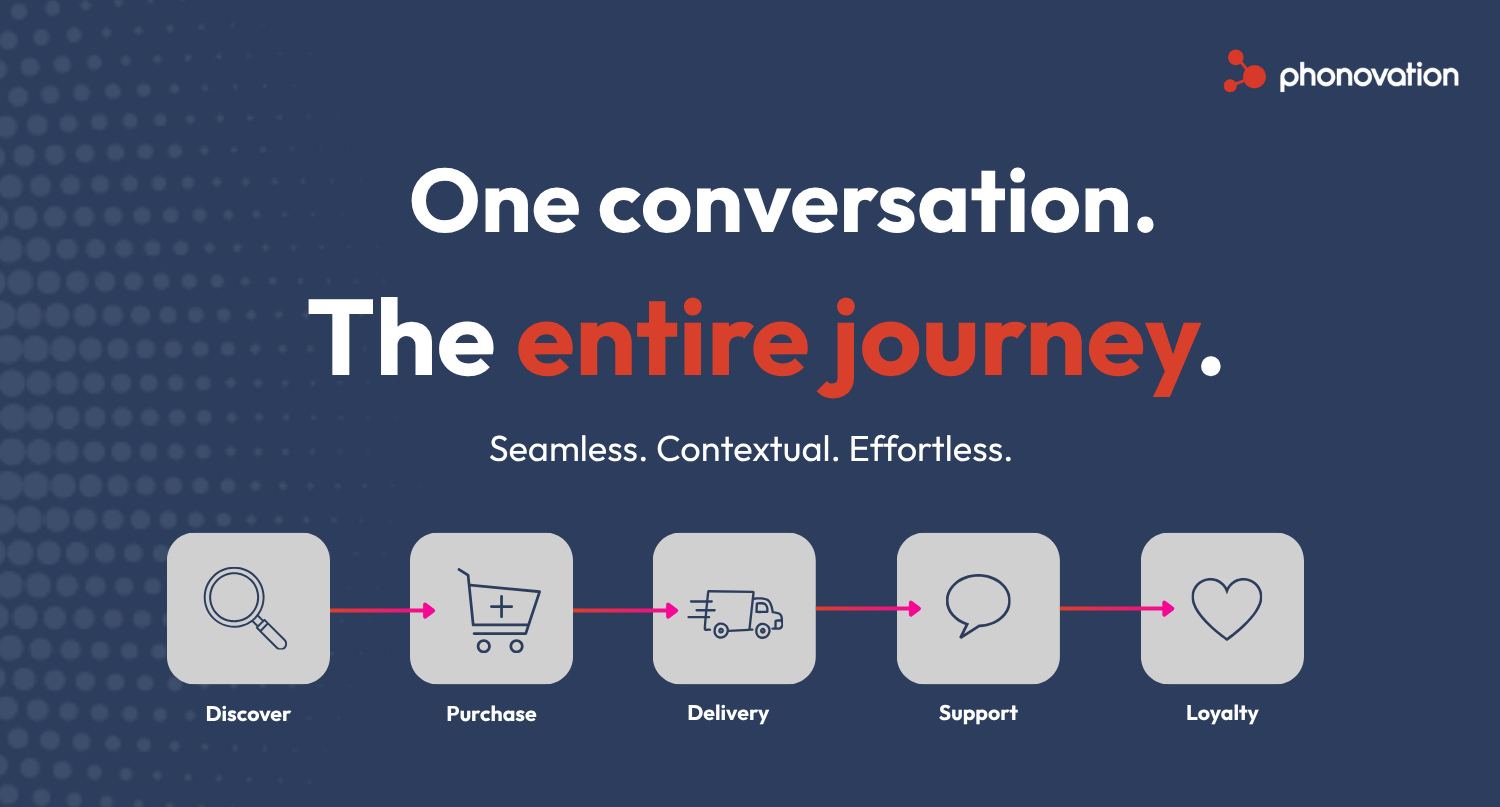
The conversation itself becomes the customer journey.
This matters because customers stopped thinking in channels a long time ago. They do not care whether they are on your app, your website, or your support line. They care whether the experience feels effortless.
Messaging is the most effortless format they already know. Across 22 global markets, 73.3% of consumers prefer messaging when communicating with a business (Meta, The State of Business Messaging 2026).
That preference is not a trend. It is the new baseline.
Why Traditional Digital Customer Journeys No Longer Work
For years, improving customer experience meant adding more channels.
More websites. More apps. More emails. More chatbots. More self-service portals.
The logic made sense: give customers more ways to interact with your business, and the experience should become more convenient.
But in many cases, businesses did not create better customer journeys.
They created bigger mazes.
Customers are pushed between websites, forms, emails, phone calls, support tickets, and chat windows, often repeating the same information at every stage while context disappears between systems.
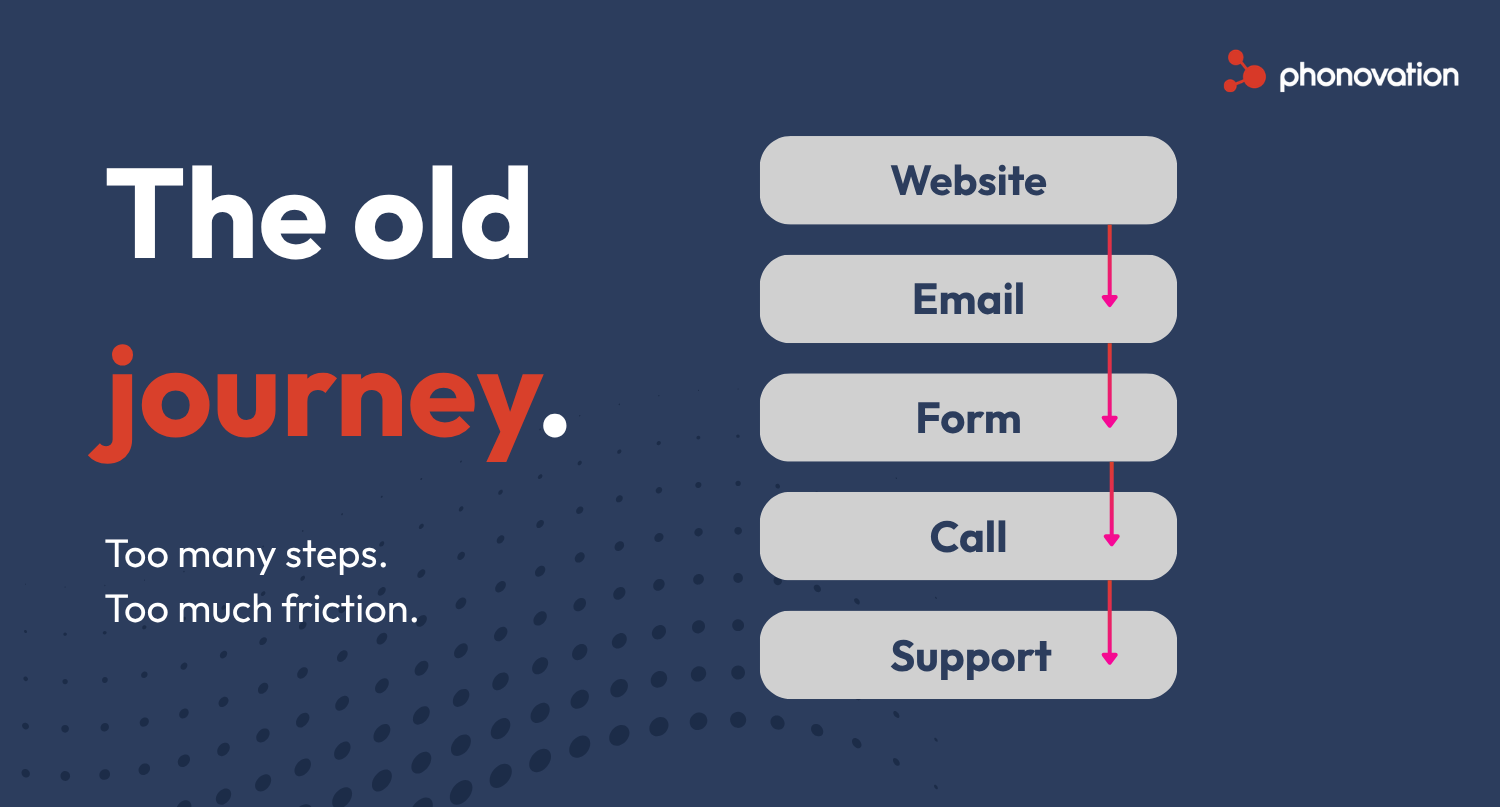
A customer might discover a product through social media, browse your website, ask a question through live chat, receive follow-up emails, and eventually call support when something goes wrong. Technically, those interactions are connected. But from the customer’s perspective, they often feel completely disconnected.
That is the real problem with traditional digital journeys.
The experience is built around systems and departments rather than around the customer themselves.
Marketing owns one touchpoint. Support owns another. Ecommerce owns another. Each interaction sits in a different platform, managed by a different team, with limited continuity between them.
The customer feels those gaps immediately.
They restart conversations. Repeat information. Re-explain problems. Rebuild context.
The friction becomes part of the experience.
Customer expectations have shifted underneath all of this.
People now expect businesses to communicate with the same continuity and convenience they experience in their everyday messaging conversations. They expect businesses to remember context, respond quickly, and allow conversations to continue seamlessly rather than forcing them to restart every interaction from scratch.
The growing preference for messaging reflects that shift. Customers increasingly expect communication to feel immediate, connected, and conversational rather than fragmented across multiple channels and systems.
The issue is no longer access. It is continuity.
Customers do not think in channels anymore. They think in conversations.
And increasingly, they expect those conversations to help them make decisions, solve problems, and move seamlessly through the customer journey without friction.
Traditional digital journeys were never really designed for that.
How Conversational Customer Journeys Improve Customer Experience
The shift to conversational journeys is not just a UX upgrade. It is a structural one.
When the conversation becomes the journey, three things change for customers straight away:
They stop repeating themselves.
They stop switching contexts.
They stop noticing the seams between marketing, sales, and support.
Everything happens inside one thread.
Discovering a product. Asking a question. Getting a recommendation. Completing a purchase. Tracking an order. Sorting out a return. Receiving a reminder. It is all one continuous exchange.
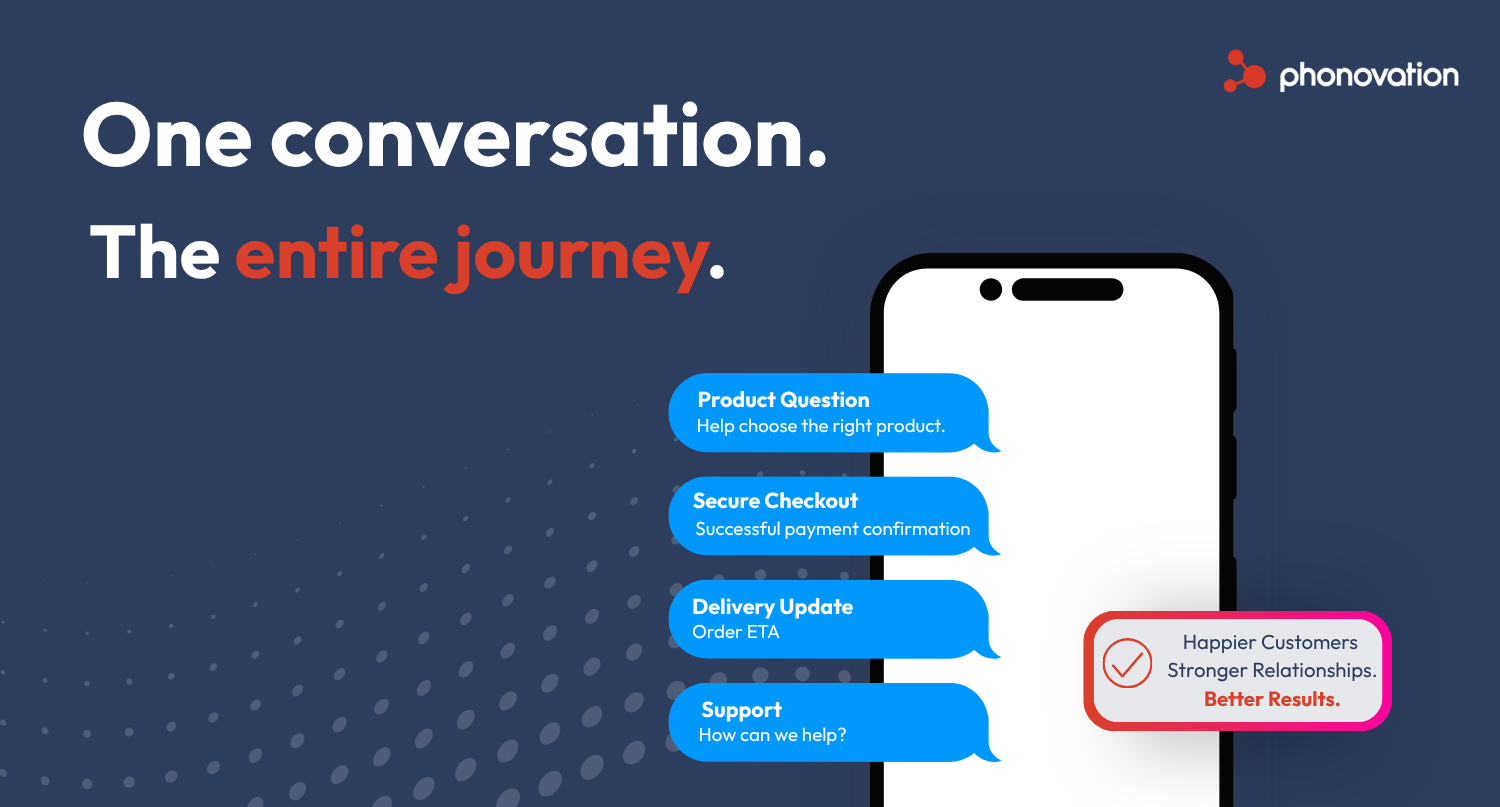
Increasingly, messaging platforms like WhatsApp are becoming spaces where customers actively make decisions, whether that is choosing a product, confirming a booking, completing a purchase, or resolving an issue in real time
The customer does not have to remember which channel did what. They just message.
This is the part traditional digital experiences cannot match, no matter how polished the individual touchpoints look.
Messaging channels like WhatsApp are central to this shift because they already fit naturally into how people communicate every day. WhatsApp Business enables brands to support customer journeys across awareness, consideration, purchase, care, and loyalty within one connected experience (Infobip, WhatsApp Business Platform A-Z Guide).
AI and automation are accelerating this shift even further.
Businesses can now use conversational AI and automated workflows to handle FAQs, send proactive updates, recommend products, manage bookings, support returns, and route more complex issues to human agents when needed.
The customer does not see the handoff. They just see fast, relevant replies.
Done well, conversational journeys feel more personal than email, faster than a call, and easier than navigating a website.
The result is a customer journey that feels less like a funnel and more like a relationship.
Why Conversational Customer Journeys Matter for Businesses
Customer experience is the surface story. The deeper story is what conversational journeys do to the economics of customer engagement.
Businesses spend huge amounts of money trying to solve problems that conversation solves naturally: recovering abandoned carts, reducing support ticket volume, capturing leads outside business hours, personalising communication at scale, and re-engaging inactive customers.
Most of these are friction problems. And most friction problems are conversation problems in another form.
The numbers behind conversational engagement are becoming difficult to ignore.
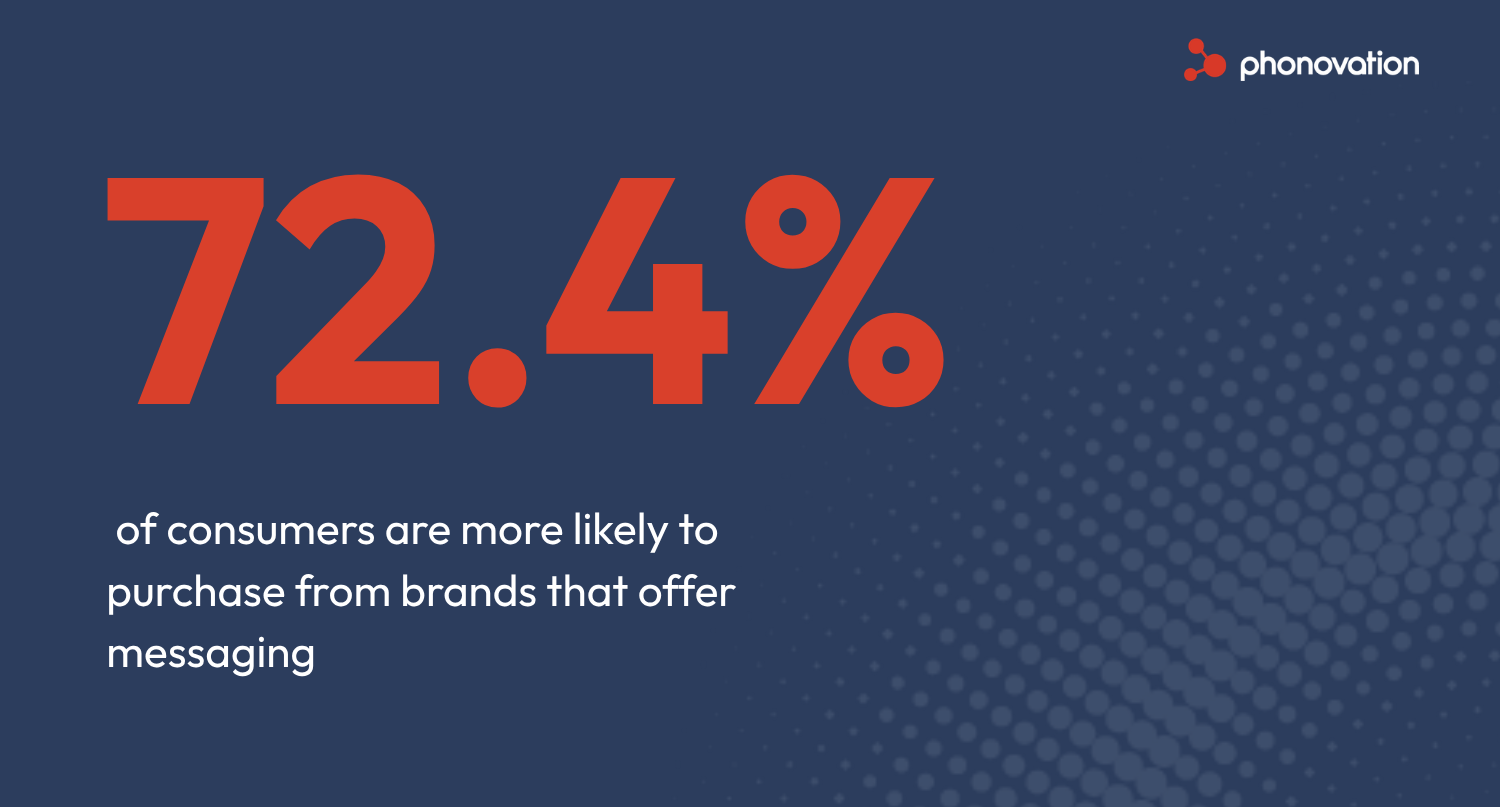
According to Meta’s research, 72.4% of consumers are more likely to purchase from brands that offer messaging, while 66.8% feel frustrated when messaging is unavailable as a contact option (Meta, The State of Business Messaging 2026).
Industry research also suggests ecommerce brands using chatbot-led conversational journeys typically see sales increases between 7% and 25%, alongside significantly higher conversion rates among customers who engage through chat (Elfsight).
Conversational upselling is also becoming increasingly effective, with chatbot-driven recommendations increasing average order value by around 15% on average.(Infobip, WhatsApp Business Platform Customer Deck)
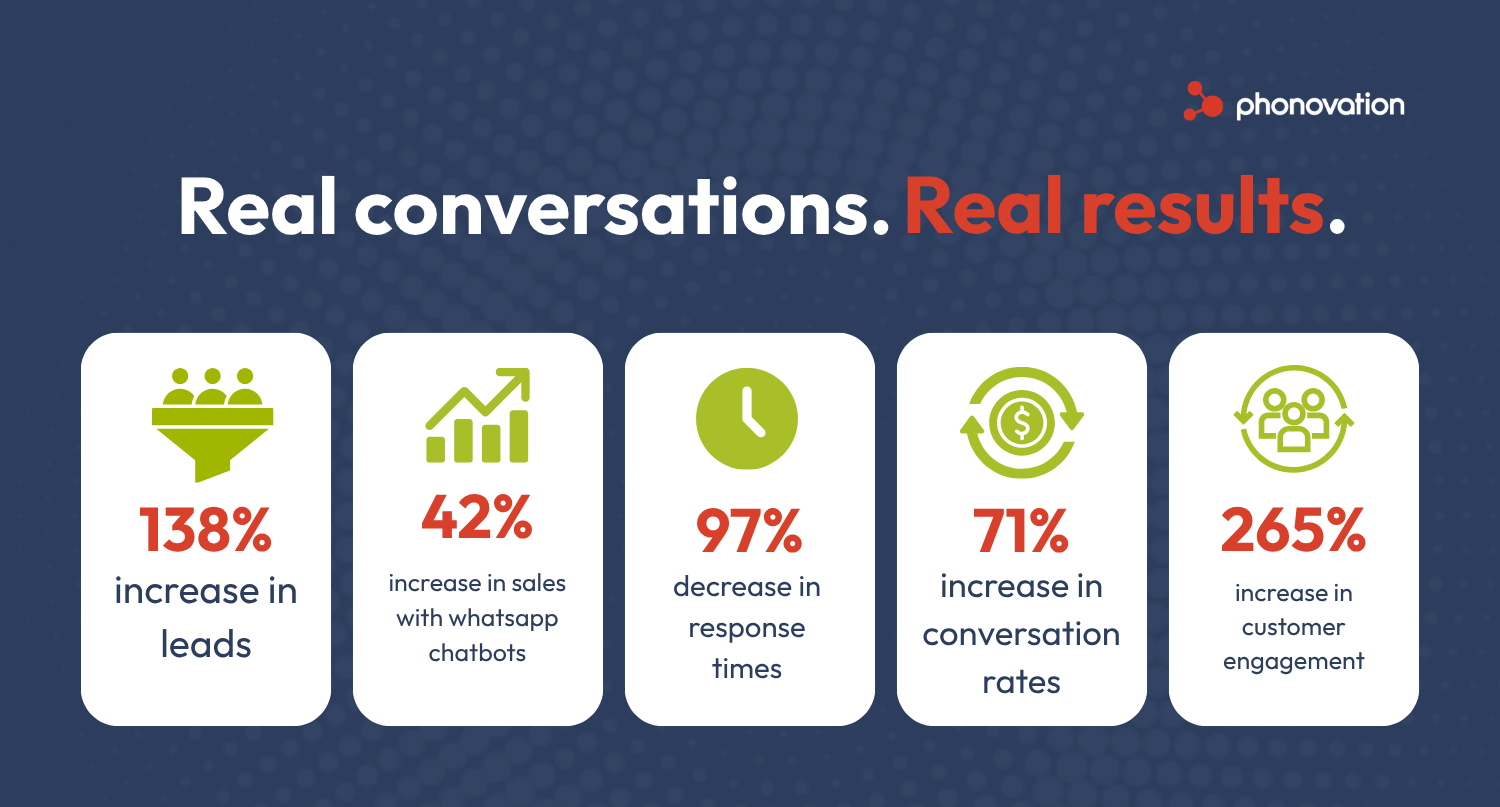
Infobip’s WhatsApp Business Platform customer examples also highlight outcomes such as:
138% increase in leads42% increase in sales with WhatsApp chatbots97% decrease in response times71% increase in conversion rates265% increase in customer engagement
(Infobip, WhatsApp Business Platform Customer Deck)
Conversational customer journeys can also improve operational efficiency. AI-powered automation and messaging workflows allow businesses to scale communication without placing every interaction on human agents.
Simple queries can be resolved instantly. More complex conversations can be handed over with context intact.
That means faster support for customers and less pressure on support teams.
Ultimately, conversational customer journeys reduce the cost of customer interaction while increasing the value of customer relationships.
That is not an incremental gain.
It is a different operating model.
The Future of Customer Experience Is Conversational
The industry data is making the direction clear.
Infobip’s Messaging Trends Report 2026, based on 628 billion mobile interactions in 2025 and 3.8 trillion messages exchanged over the last 20 years, shows just how quickly customer communication is changing.
The report found that WhatsApp accounted for 91% of conversational AI interactions on Infobip’s platform in 2025.
That concentration matters.
It tells you where customers have already decided they want to communicate with businesses.
The combination of messaging, AI, and automation is what makes conversational journeys finally workable at scale. Businesses can now offer responsive, contextual, personalised conversations across millions of customers without the operational cost that once made that impossible.
WhatsApp is no longer just a support channel in this picture.
It is becoming the connective layer between marketing, sales, support, and loyalty.
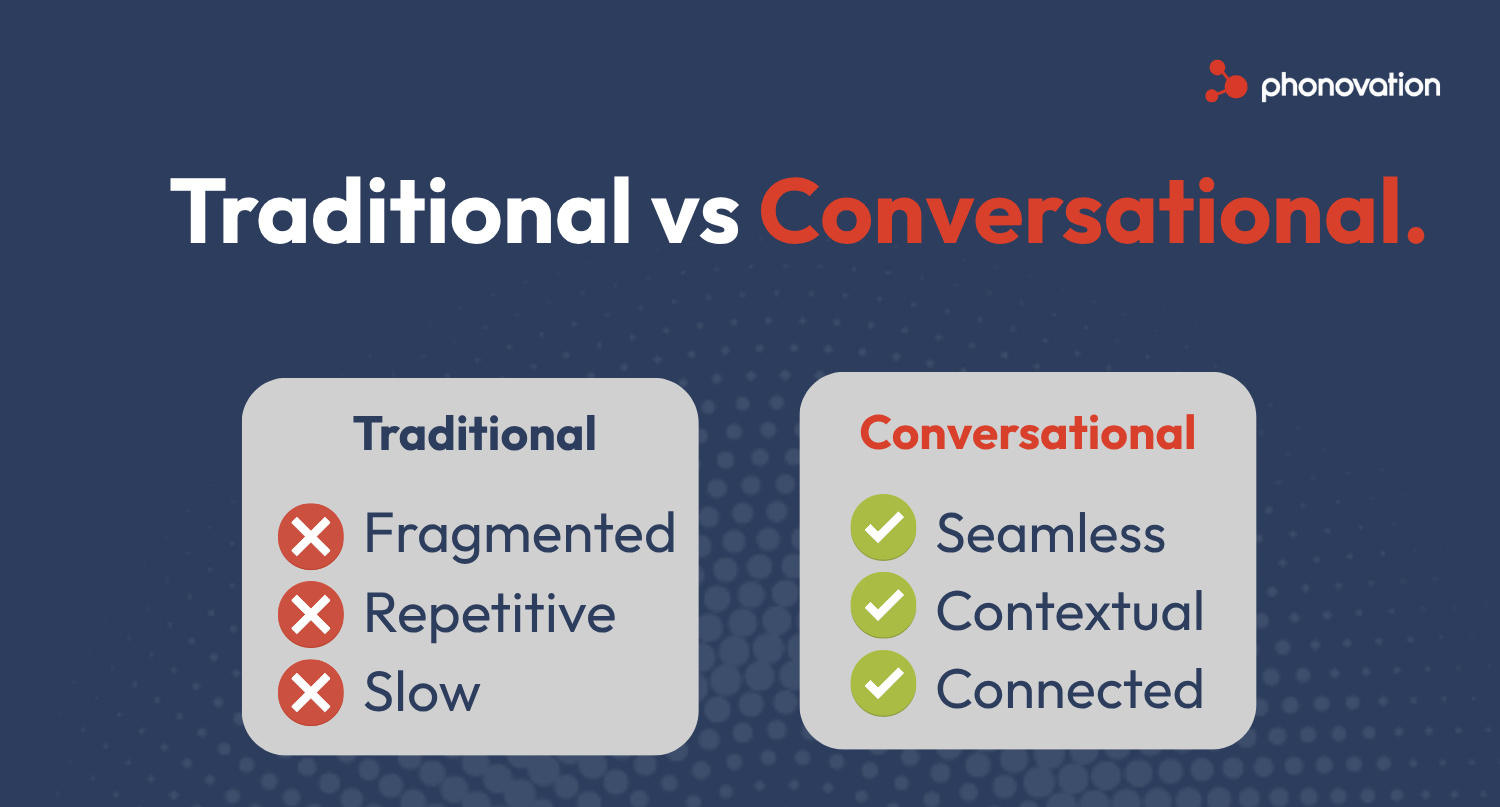
Websites and apps are not disappearing. They are becoming part of a wider conversational experience instead of being the journey itself.
The brands that figure this out first will not just have better customer experiences.
They will have a different relationship with their customers than the businesses still operating channel by channel.
Conclusion
Customer expectations did not slowly drift.
They changed in a step shift, and most businesses are still catching up.
People expect to communicate with brands the same way they communicate with everyone else in their lives: through messaging, in one continuous thread, with no friction and no repetition.
Traditional digital journeys cannot deliver that, no matter how many channels get added on top.
The architecture itself is wrong.
Conversational customer journeys represent a different model.
Not a new feature.
Not just another channel.
A fundamentally different way of designing customer experience.
One ongoing conversation that carries customers from discovery to loyalty without asking them to start over.
The brands building for this now will define what customer experience looks like next.